POLITICIAN
Vyola Olinger (Ortner)
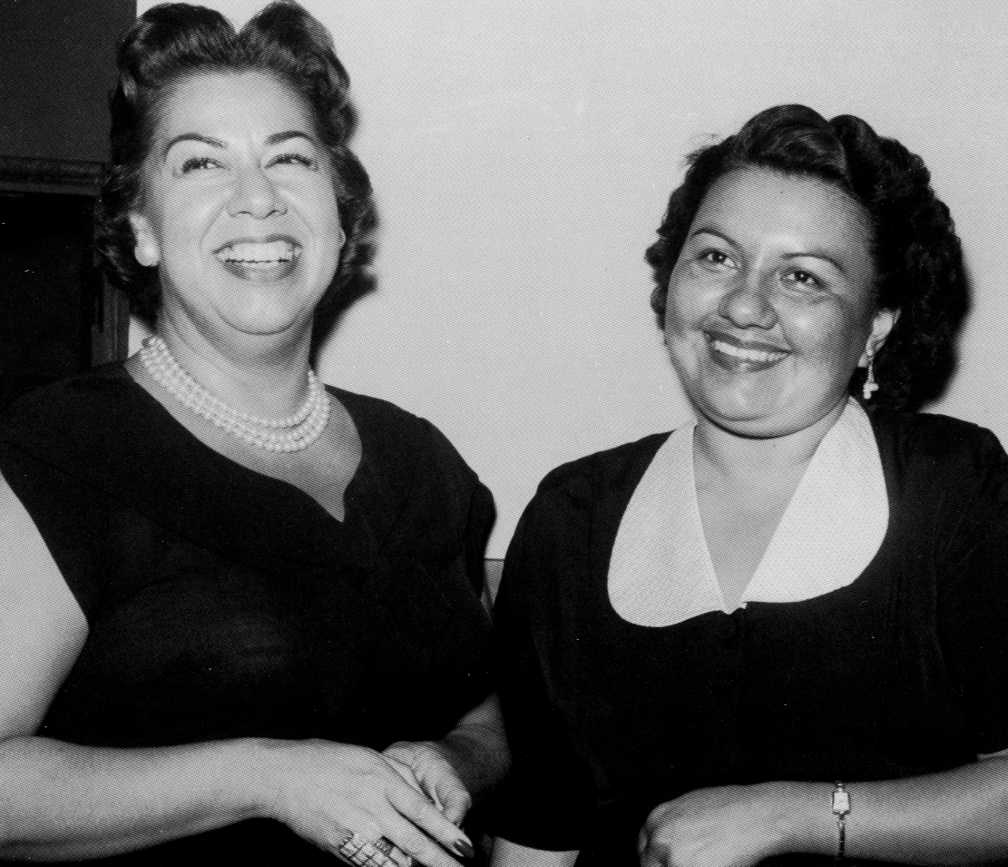
Vyola Olinger (Ortner) and Eileen Miguel, 1958
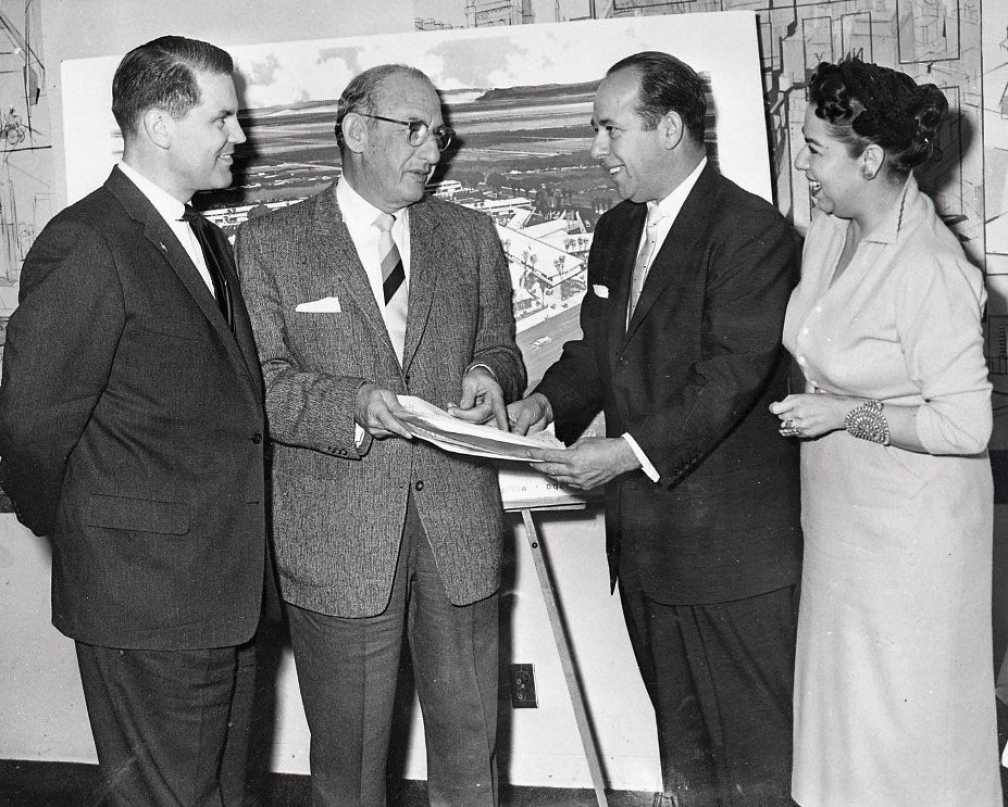
Palm Springs Spa lease signing. From left Vyola Ollinger (Ortner), Samuel Banowit, Lou Levy, and Ray Simpson, 1960, Courtesy Palm Springs Life Archive
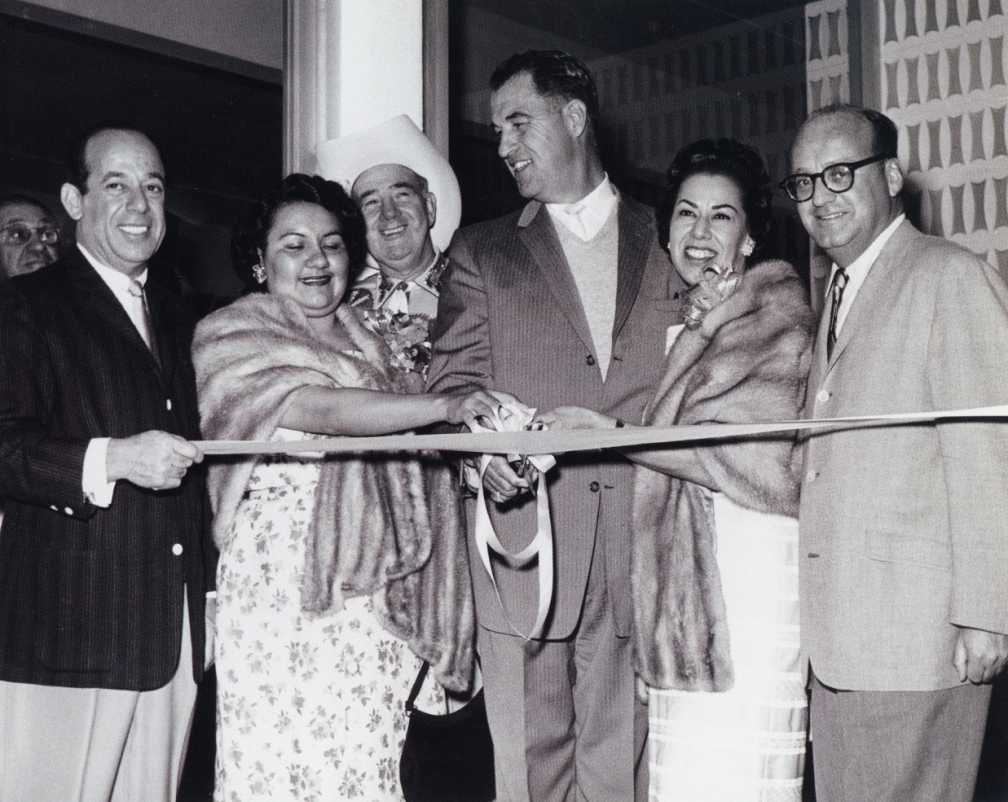
Vyola Olinger (Ortner) and Eileen Miguel with Samuel Banowit, Frank Bogert, and Scotty Rubin at the Gala Opening of the Palm Springs Spa, 1960
Vyola Ortner, one-time chair of the allwoman Agua Caliente Band of Cahuilla Indians tribal council, was central in establishing the rules governing tribal land usage; principles which have shaped what Palm Springs looks like today.
Beginning in 1955, she made repeated visits to Washington, D.C. on behalf of the Agua Caliente Tribe to fight for equalization of land ownership and the right to lease land for decades at a time. In 1957, Ortner persuaded President Dwight D. Eisenhower to sign a law allowing Indian land leases to last as long as 99 years.
These efforts led to the development of the Spa Resort, designed by William F. Cody, Wexler & Harrison, Parker-Zehnder & Associates, and Philip Koenig of Chicago. This real estate transaction between a tribe and a private developer was the first of its kind in the United States.
Ortner remained instrumental in orchestrating land use agreements and later organized a shared land-use agreement between the tribe and the City of Palm Springs in the 1970s.
The Spa Resort was completed in 1963, five years after the Agua Caliente Band of Cahuilla Indians all-woman Tribal Council leased the 8-acre site, the heart of the Agua Caliente reservation, to Samuel Banowit and Palm Springs Spa Inc.
William F. Cody, Wexler & Harrison, Parker-Zehnder & Associates and Philip Koenig of Chicago were commissioned to design the multifaceted project, which included a 30,000-square-foot health center built directly on the ancient hot mineral springs and a 131-room hotel, the tallest building in the city at that time.